
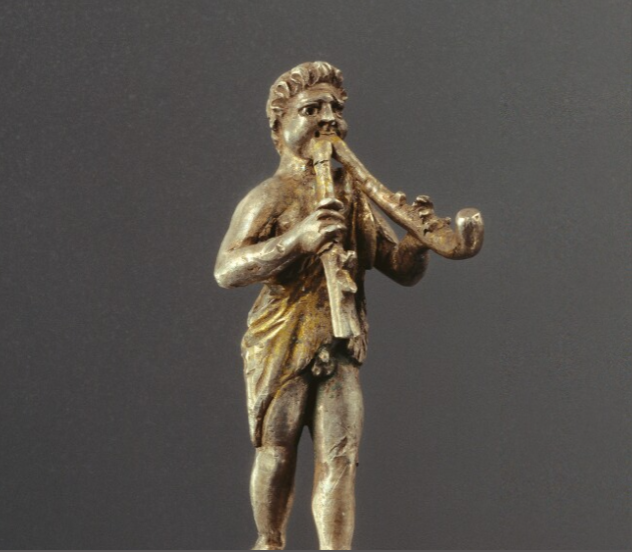
The following features describe a Satyr that is wearing panther skin and playing an instrument that resembles a double aulos. The figure is young, appears to be strong, and has short, wavy hair. The creation of a satyr figure implies one of the different ways that Romans used music. Specifically, it relates Roman music to partying and dancing.
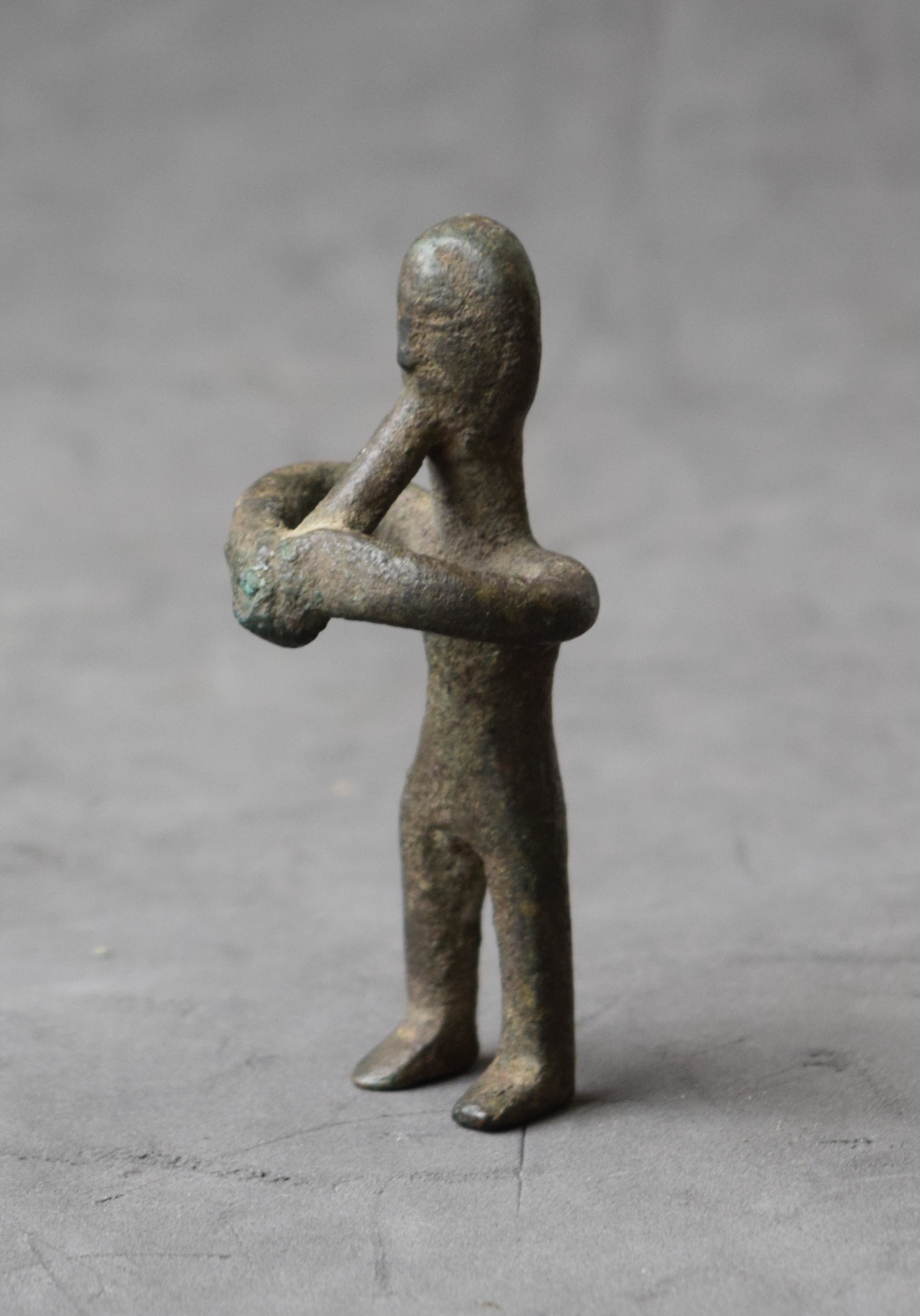
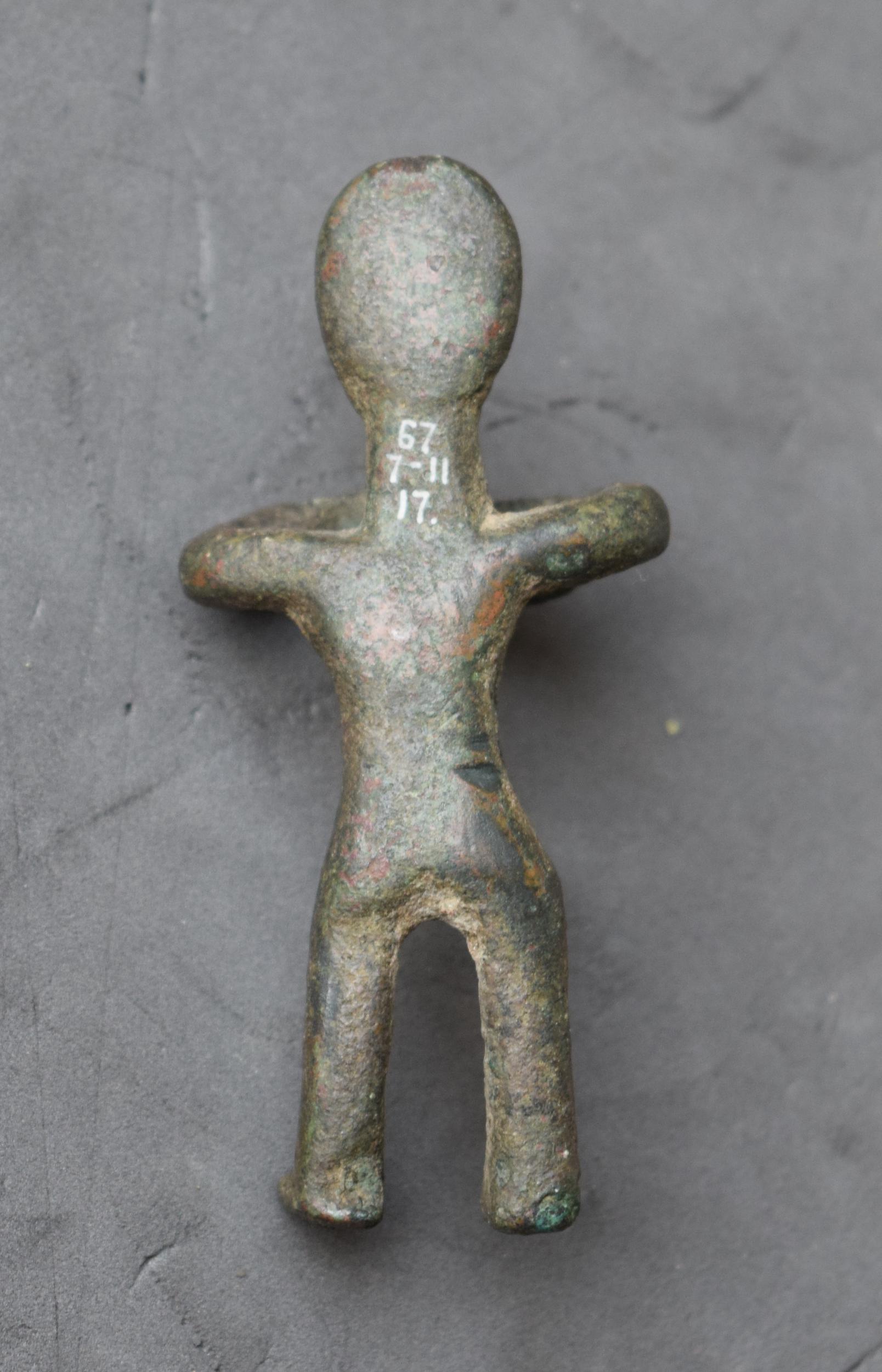
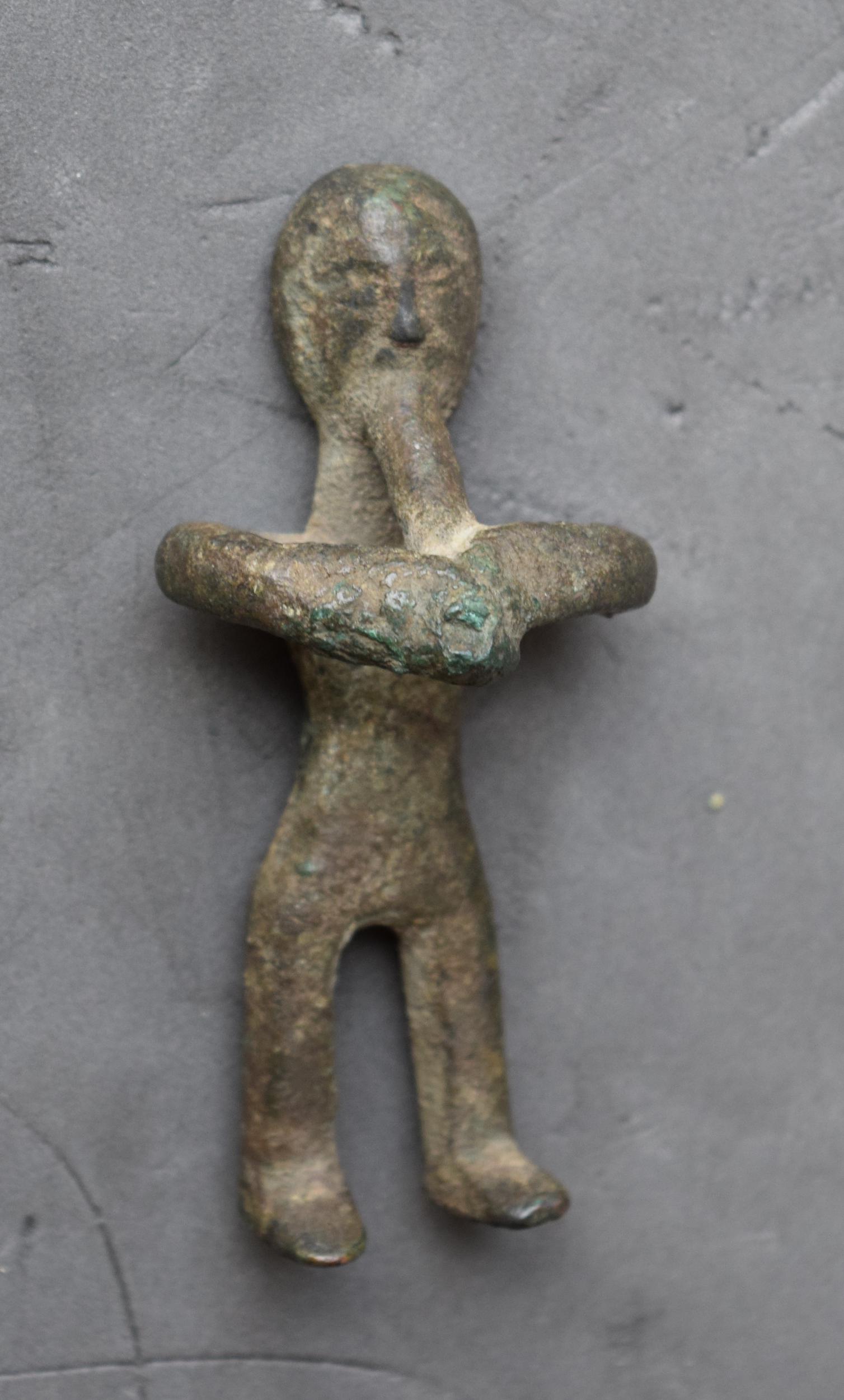
This object is a bronze cast of a man playing a pipe. The figure doesn’t have much level of detail, however a face is noticeable. It portrays yet another element of the Roman musical collection. It also displays that the instrument, or the idea of playing music, was meaningful enough to make a figure.
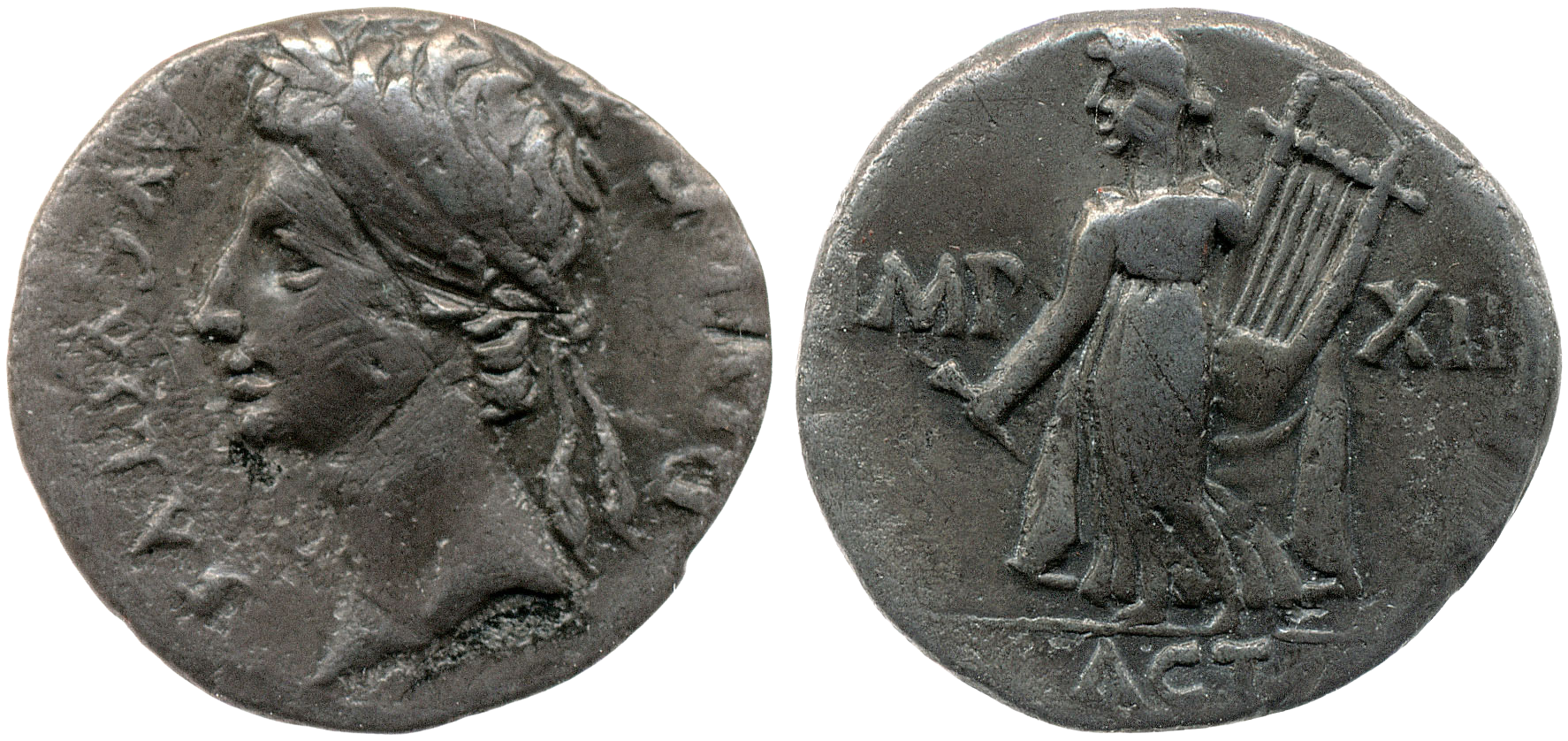
This object is a silver coin with the Head of Augustus on one side, and Apollo Citharoedus on the other. Apollo Citharoedus is holding a plectrum in his right hand and lyre in his left. A plectrum is used for plucking an instrument's strings, and a lyre is a stringed instrument like a harp. The coin is significant because it relates Roman music to victory, being created in honor of Augustus' victory at the naval battle of Actium. It also joins music and peace, as Apollo was known for music and peace-bringing.
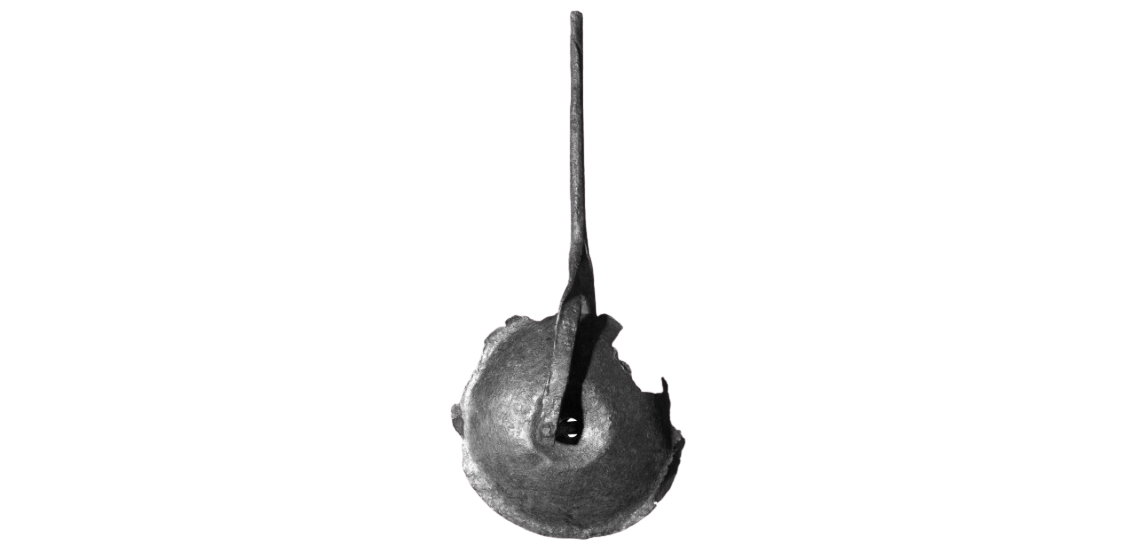
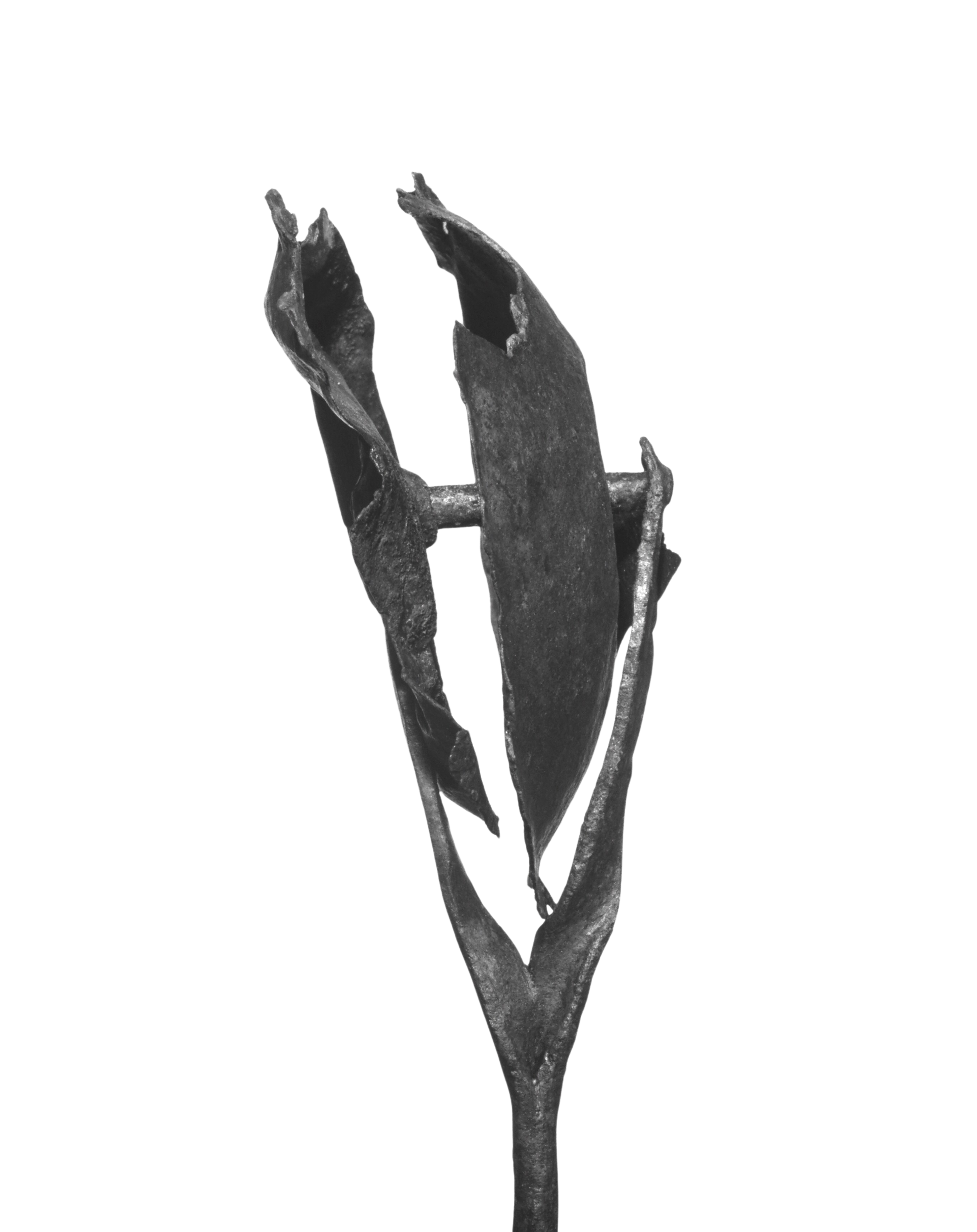
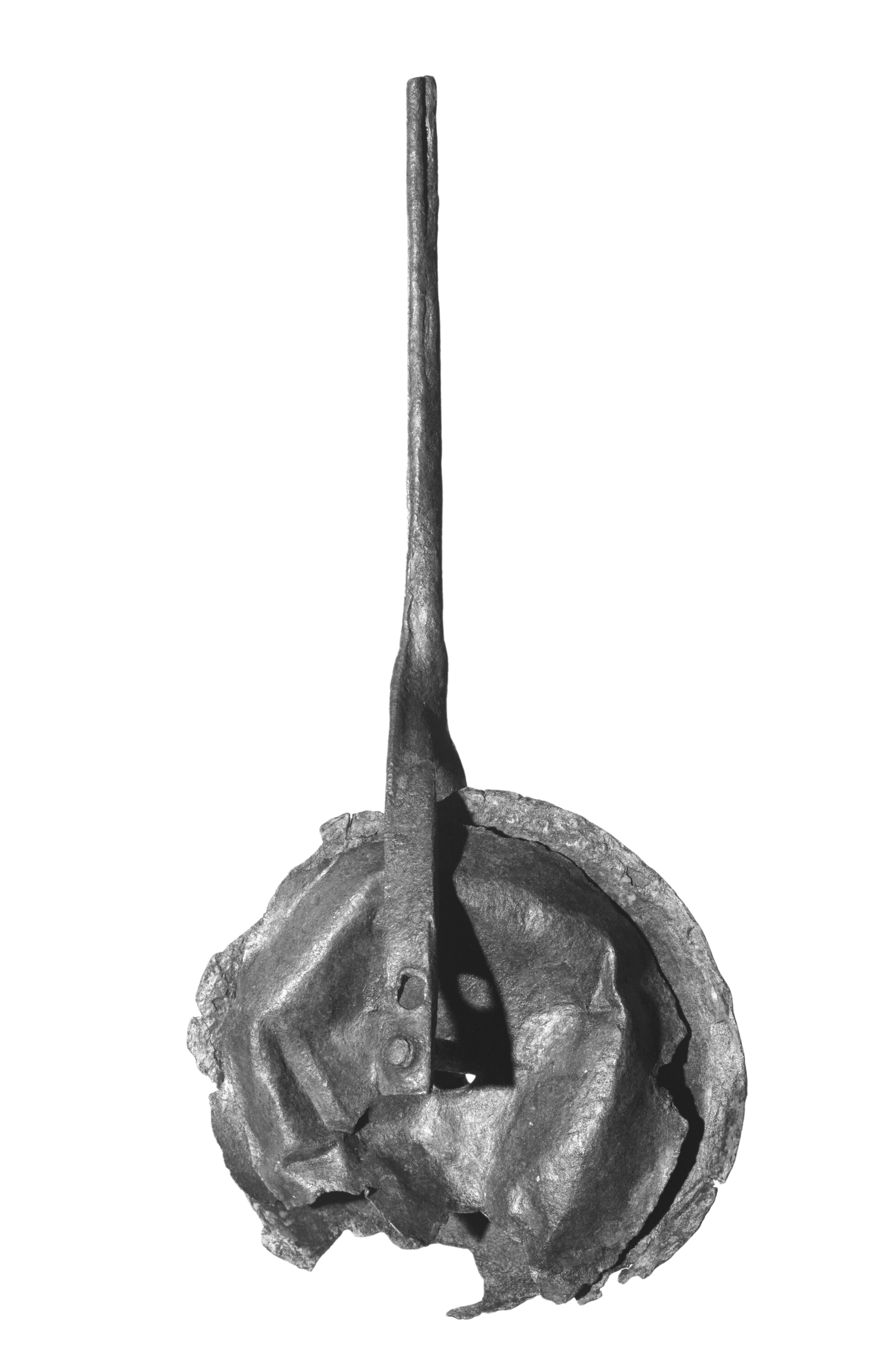
This object is a musical instrument made of two bronze clappers attached to a bronze fork. Its use resembles cymbals, shaking the instrument to hit the two clappers together to produce a sound. It adds to the various types of instruments the Romans had for creating different sounds, and displays how the ingenuity of the Roman instruments is similar to the instruments we have today.
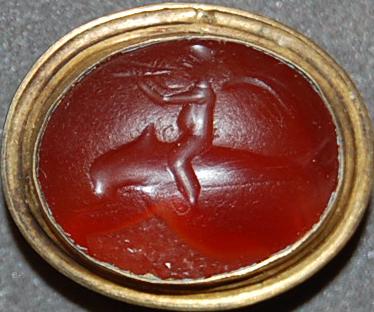
This object is a red convex sard gem with an engraving of Eros playing two flutes while riding a dolphin. Eros and the dolphin represent love and safety at sea. The gem reveals that Romans had a connection between music, love, and safety at sea.
.gif)
Welcome to the Music During the Roman Imperial Period Exhibition! This gallery centralizes around the different ways that music was created, used, or symbolized by Romans during the imperial period. Each object that you will see was thoughtfully chosen to highlight different aspects of the theme, and will fall under at least one of those three ways.
The first object, the Statuette of a Young Satyr Playing the Double Aulos, is a representation of both how music was used and symbolized. It firstly displays the Double Aulos being played. However, it’s who it’s being played by that reveals more information. The figure is a Satyr, who were mythological creatures known to be wild. Relevantly here, among the other aspects of Satyr, they liked to dance and party. This reveals that Romans could have had some relation between music and partying or dancing.
The second object is physically similar to the first: A bronze cast of a man playing a pipe. The figure adds the pipe to the Roman musical collection, and underscores that the instrument, or the idea of playing music, was important enough to Romans to make a figure.
Next is the silver coin with the Head of Aughusts on one side, and Apollo Citharoedus on the other. Apollo Citharoedus is holding a plectrum and lyre, which are similar to a guitar pick and a harp. This coin correlates Roman music to victory, in honor of Augustus' win at the naval battle of Actium. Apollo's presence also connects the coin to music and peace.
Then there is the Cymbalum: A musical instrument similar to cymbals, although functioning slightly differently. This object adds to the types of instruments Romans had to create different sounds, and it displays how similar some of their ingenuity is to our current era of music.
Lastly, the Gem: A red gem engraved with Eros riding a dolphin while playing two flutes. Combining the aspects of Eros, dolphins, and flutes, the gem reveals a connection the Romans had between music, love, and safety at sea.
All of these objects exhibit a relationship between Roman music and either physical instruments, what the music represents, or how they used the music. Thank you for visiting!
Disclaimer:
This is a student project for Intro to Roman Archaeology at The University of Texas at Austin.
It is not an offical website of The University of Texas or The Blanton Musuem of Art.